Wednesday, December 18, 2013

A Bohemian Rhapsody: Cesky Krumlov (2)

Cesky Krumlov - let's add some sqiggles - Český Krumlov, was founded in the 13th century. There are many pretty buildings, although the tower of the castle stands out. The church is St Vitus's.


The town is nestled in a bend in the Vltava river, and I slogged my way up a couple of the nearby hills, looking for the perfect birdseye shot. Never quite got it.


Before heading to the station, I bought a cheese and ham pancake - or palacinky. You get a good feed off one of those.


Czech your Passport: Cesky Krumlov (1)

My last holiday from work was several months ago (if you ignore a day trip to Liverpool to visit Her Majesty's Immigration Service, which I promise was not a relaxing getaway, although it could've led to further travel - both sudden and compulsory).

I have been to the Czech Republic before, but only to Prague, and that ten years ago on a truncated visit, so I decided to give it another go.

A friend had recommended Cesky Krumlov in the south of the country, so I flew to Linz in Austria and then took a train over the border. From there, I caught a smaller train, and then downsized again. I'm glad that train got me to CK, because the next step down was going to be me pedalling a rail jigger.

Of course it went less smoothly than I planned, and it was after 9pm before I made it to my pension. I missed the prepaid dinner that I had paid for in my reservation. There's 2 pounds I'll never get back. Actually, maybe I lucked out there.

In Linz, I ate a vividly-pink sugary snack from a bakery. It was like eating a Duplo brick.


I ventured out into the cold to look for food, but Cesky Krumlov is about as lively as Tinwald on a Thursday night in November at 10pm. My dinner ended up being a bag of tortilla chips, some cashews and some mineral water. I'm too old to be eating like that.


I guess the cashews are pudding. My mouth hurts.


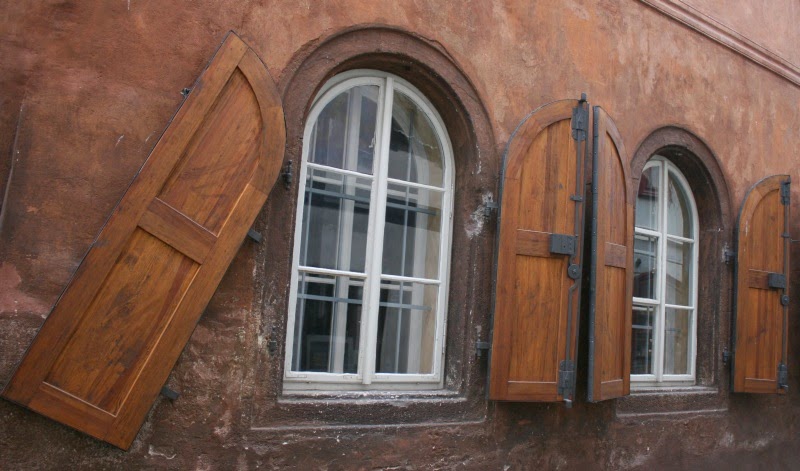
Both the centre of Cesky Krumlov and the centre of Prague are Unesco World Heritage sites. And I think they're justifiable inclusions, because they're both beautiful. I was blown away. Here are some shots from my wander around the town the next day.


The sign on the wall is the edge of the bear pit. That's right: anyone can swim across a moat to attack a fortress, but it takes a real bad-arse to swim across a moat full of bears.

And the Czechs are famous for producing great bears.

Tuesday, October 15, 2013

The Peddars Way

One of the things I miss most about New Zealand is the solitude and reflection that you can achieve while tramping. In my part of England, just down the road from 12 million people, it is very difficult to get away from the crowds.

Slap bang in the middle of East Anglia is the Peddars Way - a long distance hiking trail that runs from the Suffolk border, up through Norfolk to the north coast. Over the last several weekends, I walked it in both directions (150 km).


It has little in common with a kiwi tramping track. It runs through farm land and is periodically on-road. At one point it follows a major gas pipeline, and at another it crosses the back door of a bizarrely-located McDonalds. The hum of traffic on the nearby motorways almost never fades from hearing.

However, mankind's touch on the area is also a benefit. The Peddars Way is drenched in history. The path passes through Castle Acre, which features both a 12th century Norman castle and the ruins of an 11th century monastery, and passes directly through the town's 13th century gate.


Norman Castle


Cluniac Priory

Older still, towards the coast, a series of early-to-middle Bronze age burial mounds are now grazed by sheep.


Bronze-age Burial Mound

The path itself follows a 2000 year old Roman road, build to access the territories of the Iceni tribes. Around 60AD, the Romans tried to take the Iceni leader Boudica's territory, and she responded by marching her warriors off to destroy Colchester, London, and St Albans. 

Wildlife abounds. I am now one of the world's leading experts at flushing grouse. These idiot birds run along the path in front of you, too stupid to turn left or right. Hundreds of the fools fled in terror before me.


I encountered hares, rabbits, muntjac deer, pigeons, and quail. I saw 2 snakes, one well deceased. The other slithered off the path in front of me. 

At one point, as I skirted the Sandringham estate, Prince Phillip fired off a couple of shots at me. My skin's pretty pale, so he was probably aiming high. 

To my surprise, I had the Way mostly to myself. Over the whole distance I met only 2 sets of hikers and a few people walking their dogs.


The path starts in flat forest to the south, around Thetford. As you head north it gradually dries out and turns to rolling hills. All along the length, it is well maintained, easy walking.


Eventually, the Way crests a hill and descends towards Holme-next-the-Sea on the coast. (Honestly, it should be Holme-next-to-the-Sea. It's no wonder they have to import writers.)


From there, it's a bit of a wade through muddy bog to the ocean.


James-Next-the-Sea

I really enjoyed the walk. It's certainly not a New Zealand tramping track, but it's not bad.

Tuesday, August 27, 2013

Cycle Tour '13

It was the Summer bank holiday this weekend, and I managed to make a quick trip. This should be pretty easy to guess from the video.


That's the problem with cycle touring: some cock always gets in your way.


I rolled off the ferry at Hoek before 8am, and set off to skirt around the east side of the Hague, through Delft to Leiden.


Last time I was in Leiden, the castle was closed for repairs. This time I got to have a snoop around. There is a well in the middle where, stories claimed, cod were caught, there were secret passages to outside the city, and anything thrown in would wash up on the coast. All lies.


Me nestled in among the other bike tourists. I love the Netherlands.


I walked to Leiden station and took a train to Amsterdam. There, I spent the day at the newly re-opened Rijksmuseum. The star attraction there is Rembrandt's "the Night Watch".

The name is a little misleading. When they restored the painting, it turned out that it wasn't night at all - the painting was just very, very grubby. Yes, that's true.


Bulbs in a stall at the flower market.


On the third day, I got up very early and raced back down the coast to Hoek to catch the afternoon ferry sailing. I followed my old friend, the North Sea Route: LF1a along the edge of the dunes. It was great.


About 12 hours, a mega-ferry, and 3 trains later, I was home again. The whole trip only took about 72 hours, but it felt like I was away for a week.